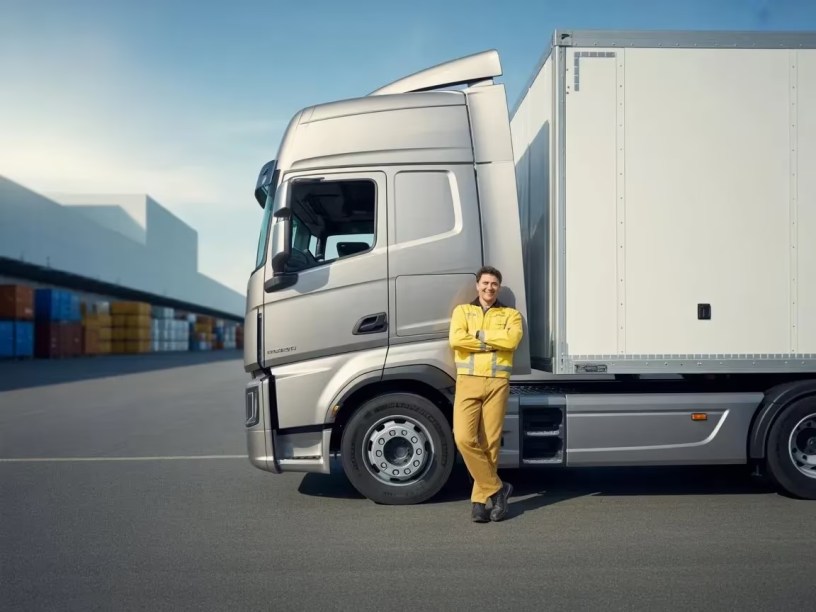
Businesses that need goods moved occasionally tend to think in terms of two options: rent a vehicle and send a member of staff, or engage a logistics company on contract. Between those sits a third arrangement that is often better suited to irregular work. By hiring a truck with a driver included, a company gets the vehicle and a professional behind the wheel for a defined period, without taking on the licensing, insurance and staffing questions that come with driving it in-house.
What the Arrangement Covers
A driver-included hire supplies a commercial vehicle together with someone employed by the rental company to operate it. The customer directs the work: where to collect, where to deliver and in what order. The hire may be charged by the hour, by the day or by the trip. It differs from a courier service in that the vehicle is dedicated to one customer for the period, and from self-drive rental in that responsibility for driving remains with the provider.
When It Makes More Sense Than Self-Drive
Self-drive rental assumes the business has someone suitable to drive. Many do not. Office staff may hold a car licence yet have no experience of manoeuvring a loaded lorry through a basement loading bay. Pulling an employee from their normal duties for a day also has a cost. Where the need is occasional, such as an exhibition, an office move, a seasonal delivery peak or a one-off equipment transfer, a supplied driver removes those difficulties.
Licence Classes and Vehicle Size
In Singapore the licence required depends on the vehicle’s weight. An ordinary Class 3 licence covers cars and lighter goods vehicles, while heavier lorries call for a Class 4 licence that far fewer employees hold. This alone can rule out self-drive for larger loads. With a driver supplied, the rental company is responsible for matching a correctly licensed person to the vehicle, and the customer need not check anyone’s driving record or entitlement.
Insurance and Liability
Commercial vehicle insurance typically names or restricts who may drive, often by age and years of experience, and carries an excess payable after an accident. When an employee drives a rented truck, the hirer usually bears that excess and the administrative burden of a claim. Businesses that prefer hiring a truck with a driver included are generally seeking to leave the driving risk with the provider. It remains important to ask how goods in transit are covered, since vehicle insurance does not ordinarily extend to the cargo.
Choosing the Right Vehicle
The appropriate vehicle follows from the load. A double-cab pickup suits tools, site materials and a small crew travelling together. A panel van protects cartons and equipment from the weather. A box or open lorry handles pallets, furniture and bulky items, and a tail-lift helps where there is no raised loading dock. Give the provider the dimensions and weight of the largest item and the total volume, and ask for a recommendation before a vehicle is assigned.
What the Driver Will and Will Not Do
Expectations should be settled beforehand. A driver is engaged to drive, secure the load and follow the agreed route. Carrying goods up staircases, dismantling furniture or packing is not automatically included, and may require additional helpers at extra cost. Ask whether the driver assists with loading at ground level, whether trolleys or straps are provided and whether a second person can be supplied. Clarity here prevents delay and disagreement on the day.
How Charges Are Usually Structured
Rates are commonly quoted per hour with a minimum number of hours, or as a fixed sum for a defined trip or day. Check what is included: fuel, road pricing charges, parking and any waiting time. Overtime, late-night work and public holidays may attract surcharges. Ask from what point the clock starts, since some providers charge from departure and return to their own premises. A written quotation setting out these points makes comparison between providers straightforward.
Site Access and Timing
Many delays arise at the kerb and not on the road. Commercial buildings often require loading bays to be booked, restrict goods lifts to certain hours and impose height limits at basement entrances that taller lorries cannot clear. Residential estates may limit where heavy vehicles can stop. Confirm these details at both ends of the journey and pass them to the provider, together with a contact person at each location who can receive the driver.
Briefing the Provider Properly
A good brief contains the date and reporting time, addresses in sequence, a description of the goods, any fragile or high-value items, access restrictions and a mobile number for someone with authority to make decisions. If the work involves several drops, give a realistic estimate of handling time at each. The more accurately the job is described, the more likely the right vehicle arrives and the quoted hours prove sufficient.
Deciding Whether It Suits Your Business
The arrangement suits companies with irregular transport needs, no licensed or experienced driver to spare and a preference for predictable costs. Firms moving goods daily may find a long-term lease or a dedicated driver more economical. For everyone else, the questions are practical ones: the size of the load, the hours required, the access at each site and what the rate includes. With those answered, hiring a truck with a driver included is usually a simple and proportionate way to get the job done.

