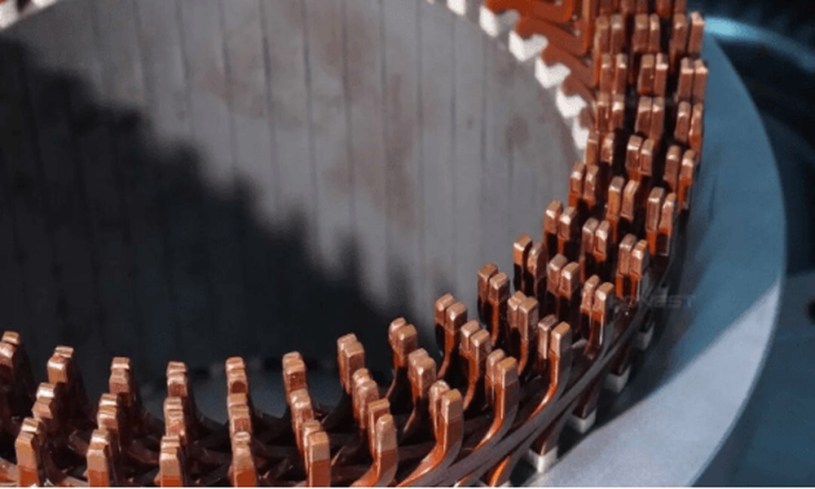
The electric motor industry is undergoing a significant transformation driven by the rapid growth of electric vehicles, renewable energy systems, industrial automation, and advanced manufacturing technologies. As demand for high-performance motors continues to rise, manufacturers are seeking innovative production methods that can improve efficiency, reliability, and power density. One of the most important developments in recent years is hairpin winding technology, a solution that is redefining how modern electric motors are designed and produced.
By offering superior electrical performance and manufacturing precision, hairpin winding has become a preferred choice for many leading motor manufacturers. From electric vehicles to industrial machinery, this advanced winding method is helping companies meet the growing need for efficient and compact motor solutions.
Understanding Hairpin Winding Technology
Traditional electric motors typically use round copper wire wound into stator slots. While this approach has been widely used for decades, it presents limitations in terms of copper utilization, thermal management, and overall efficiency.
Hairpin winding technology uses rectangular copper conductors that are pre-formed into hairpin-shaped structures before being inserted into the stator. After insertion, the conductors are twisted and welded together to create the complete winding system.
This method allows for a much higher slot fill factor compared to conventional winding techniques. Because more copper can be packed into the stator slots, electrical resistance is reduced and motor performance is enhanced. The result is a more efficient motor capable of delivering greater power output within a compact design.
As manufacturers continue to push the limits of motor performance, the adoption of hairpin winding is accelerating across multiple industries.
Why the Industry Is Embracing Hairpin Winding
The transition toward electrification has created new challenges for motor manufacturers. Electric vehicles, in particular, require motors that provide high efficiency, extended operating ranges, and excellent thermal performance.
Hairpin winding offers several advantages that directly address these requirements. The rectangular conductors maximize copper usage within the stator, reducing energy losses and improving overall efficiency. Improved heat dissipation helps motors operate at higher power levels while maintaining reliability.
In addition, the structured nature of the winding process allows for greater manufacturing consistency. Automated production systems can precisely form, insert, and connect conductors, ensuring repeatable quality across large production volumes.
These benefits have made hairpin winding technology a critical component in the next generation of electric motor manufacturing.
Improved Efficiency and Power Density
One of the primary reasons manufacturers are adopting hairpin winding is its ability to improve motor efficiency. Electrical resistance within motor windings contributes to energy losses, which can negatively impact performance.
Because hairpin windings use larger rectangular conductors with greater copper density, resistance is reduced compared to conventional round-wire designs. This improvement leads to lower power losses and higher operating efficiency.
Power density is another important advantage. By maximizing the use of available space inside the stator slots, manufacturers can produce motors that deliver more power without increasing overall size. This is particularly valuable in electric vehicle applications where space and weight are critical considerations.
The combination of higher efficiency and increased power density makes hairpin winding an attractive solution for advanced motor designs.
Enhanced Thermal Management
Heat generation is a major challenge in electric motor operation. Excessive temperatures can reduce efficiency, shorten component lifespan, and negatively affect overall performance.
Hairpin winding technology contributes to improved thermal management through better conductor placement and increased copper utilization. The structured arrangement of rectangular conductors creates more effective heat transfer pathways within the motor.
Improved cooling allows motors to operate under higher loads while maintaining stable temperatures. This capability is especially important in demanding applications such as electric vehicles, industrial automation systems, and high-performance machinery.
As performance requirements continue to increase, efficient thermal management remains a key advantage of hairpin winding designs.
Automation and Manufacturing Precision
Modern motor production requires exceptional consistency and quality control. Traditional winding methods often involve complex manual processes that can introduce variability into production.
Hairpin winding is highly compatible with automated manufacturing systems. Advanced equipment can accurately form copper conductors, insert them into stator slots, perform twisting operations, and prepare connections for welding.
Automation improves precision while reducing the likelihood of human error. Manufacturers benefit from higher production speeds, lower labor costs, and more consistent product quality.
The ability to automate key production stages has been a major factor in the widespread adoption of hairpin winding technology across global manufacturing facilities.
Applications Across Multiple Industries
Although electric vehicles have become one of the most visible applications, hairpin winding technology is used in a wide range of industries.
The automotive sector relies heavily on hairpin windings for traction motors used in electric cars, buses, trucks, and hybrid vehicles. These applications benefit from the technology’s efficiency and compact design advantages.
Industrial automation systems also utilize hairpin-wound motors to improve energy efficiency and operational performance. Manufacturers seeking to reduce energy consumption often turn to advanced motor designs incorporating this technology.
Renewable energy systems, including wind power generation and energy storage solutions, increasingly employ motors and generators that take advantage of hairpin winding capabilities.
As electrification expands across industries, the demand for hairpin winding solutions is expected to continue growing.
Challenges and Considerations
Despite its many advantages, implementing hairpin winding technology requires specialized equipment and expertise. The manufacturing process is more complex than traditional winding methods and demands precise control at every stage.
Conductor forming, insertion, twisting, and welding must all be executed with high accuracy to achieve optimal performance. This often requires significant investment in advanced production systems and operator training.
Manufacturers must also carefully manage quality control processes to ensure reliable electrical connections and consistent winding geometry. However, the long-term benefits often outweigh these initial challenges, particularly for high-volume production environments.
As equipment technology continues to advance, many of these implementation barriers are becoming easier to overcome.
The Future of Hairpin Winding Technology
The future of electric motor manufacturing is closely linked to ongoing advancements in hairpin winding technology. As electric vehicles become more common and industries pursue greater energy efficiency, demand for high-performance motors will continue to rise.
Manufacturers are investing heavily in research and development to improve production speed, automation capabilities, and welding techniques. Emerging technologies such as artificial intelligence, machine learning, and predictive maintenance are expected to further enhance manufacturing efficiency.
In addition, evolving motor designs will likely create new opportunities for innovation within the hairpin winding sector. Equipment suppliers and motor manufacturers are continuously working together to optimize performance and reduce production costs.
These developments will strengthen the role of hairpin winding in the future of electric mobility and industrial electrification.
Conclusion
The evolution of electric motor manufacturing has created a strong demand for technologies that deliver greater efficiency, reliability, and performance. Hairpin winding technology has emerged as one of the most significant innovations in this field, providing substantial advantages over traditional winding methods.
Through improved copper utilization, enhanced thermal management, higher power density, and compatibility with automated production systems, hairpin winding is helping manufacturers meet the challenges of modern motor design. As industries continue to embrace electrification, hairpin winding will remain a key driver of innovation and progress in electric motor manufacturing worldwide.

