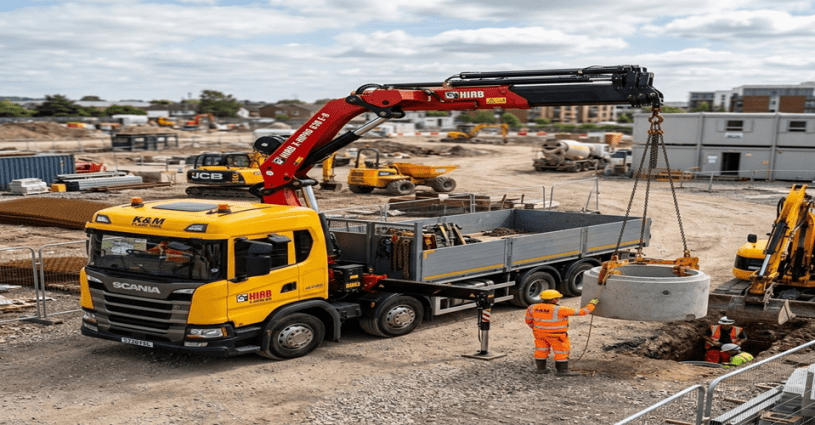
Operating a lorry-mounted crane carries significant responsibility. You are manipulating tonnes of material in busy construction sites where a single misjudgement has severe consequences. HIAB training gives operators the exact skills required to handle heavy lifting equipment safely and legally. Accidents involving hydraulic loader cranes often result in serious injuries, making proper instruction absolutely critical.
Regulators take site safety incredibly seriously. This guide covers what to look for in a certification programme, what operators actually learn, and how to select a provider that delivers practical instruction. Understanding these elements helps you build a highly competent team.
The Importance of Certified HIAB Operators
Lifting heavy loads demands precise control and acute spatial awareness. Uncertified operators present a massive liability for any transport business, as they lack the formal knowledge to identify hidden hazards. By putting your staff through accredited HIAB training, you protect your workers from preventable accidents that occur during poorly planned lifts.
Certification also proves your compliance with UK legislation, specifically the Lifting Operations and Lifting Equipment Regulations 1998 (LOLER). Safety inspectors look directly at operator qualifications during site visits. Having fully trained staff protects your business from heavy fines, project delays, and lasting reputational damage. Certified operators understand how to assess ground conditions and deploy stabiliser legs correctly.
Key Components of HIAB Training Programs
A comprehensive training course breaks down into theoretical knowledge and practical application. In the classroom environment, candidates learn to interpret load charts, calculate weights, and understand the stability factors of their specific vehicle. They study daily inspection routines to spot mechanical faults, hydraulic leaks, or structural wear before operations begin.
Once the theoretical assessment is passed, candidates move to the practical phase in the yard. They spend hours at the controls of a lorry-mounted crane, practising lifting, moving, and placing various loads in simulated site conditions. Instructors observe how well they communicate with banksmen and manage the immediate working area. The final test evaluates their ability to safely execute tasks under pressure.
Benefits of Professional HIAB Certification
Investing in formal accreditation yields direct financial returns for your company. Certified operators work with far greater efficiency, reducing the time it takes to complete complex lifts. This operational speed translates directly to lower site costs and higher client satisfaction on every project.
Furthermore, properly trained staff cause less wear and tear on your expensive lifting machinery. They operate the hydraulic systems smoothly rather than making sudden movements, which extends the lifespan of the equipment and reduces sudden maintenance bills. Insurance providers also view accredited workforce credentials favourably. They often offer lower premiums to companies that prioritise verifiable operator competence.
Choosing the Right HIAB Training Provider
Selecting an appropriate training centre determines the quality of instruction your team receives. Look for institutions accredited by recognised bodies such as the Association of Lorry Loader Manufacturers and Importers (ALLMI) or the Construction Plant Competence Scheme (CPCS).
These accreditations guarantee that the syllabus meets national safety standards and reflects the latest industry regulations. You should also evaluate the instructor-to-candidate ratio before booking a course. Smaller class sizes mean your staff receive more time at the controls rather than standing around watching others practise. A good provider uses modern equipment that closely matches the machinery your operators will actually use.
Taking the Next Steps in Operator Safety
Upgrading your workforce through formal HIAB training makes straightforward business sense. It protects your staff, preserves your equipment, and secures your legal standing in a highly regulated industry.
Assess your current team’s qualifications today and identify any gaps in their certification. Reach out to an ALLMI or CPCS accredited training centre in your area to schedule a consultation. By booking a course, you take a definitive step to improve your site safety and operational efficiency.
FAQs
What does HIAB training include for beginners?
HIAB training covers both classroom learning and hands-on crane operation. Beginners learn about load safety, stabilizer setup, lifting techniques, and daily equipment checks. Most courses also include a final practical assessment to test real-world skills.
How long does a HIAB certification course take?
Most HIAB certification courses take one to three days, depending on experience level and crane type. Refresher courses are usually shorter for experienced operators. Training providers may also offer flexible schedules for companies with larger teams.
Is HIAB training required by UK law?
HIAB training is not directly named as a legal requirement, but employers must ensure operators are fully competent under LOLER regulations. Certified training helps prove that operators can use lifting equipment safely. This also reduces the risk of legal issues during inspections or accidents.
Can HIAB training improve workplace safety?
Yes, professional HIAB training greatly improves safety on construction and delivery sites. Operators learn how to prevent tipping, avoid overloads, and handle lifts in tight spaces. Proper training lowers accident risks and helps create a safer working environment for everyone nearby.
How do I choose the best HIAB training provider?
Look for a provider accredited by recognized organizations like ALLMI or CPCS. Check reviews, instructor experience, and the type of equipment used during training. Smaller class sizes are also helpful because they give operators more practical time with the crane.

