Introduction
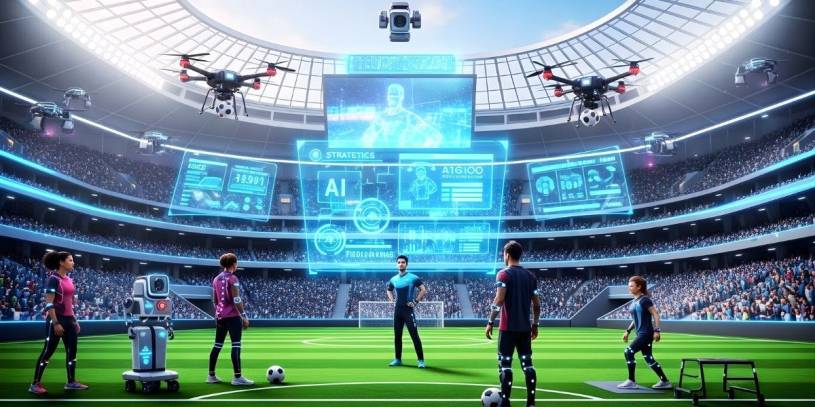
The future of sports is not just about athletes and performance—it’s also about where the game is played. Artificial Intelligence (AI) is transforming sports infrastructure by turning traditional stadiums and training centers into smart, connected, and efficient environments.
From intelligent crowd management to energy-efficient operations and AI-powered training facilities, technology is redefining how sports venues are built and managed.
In this article, we explore how AI revolutionizing sports infrastructure, its benefits, real-world applications, and future potential.
What is AI in Sports Infrastructure?
AI in sports infrastructure refers to the integration of:
- Artificial Intelligence
- Internet of Things (IoT)
- Data analytics
- Automation systems
to enhance the functionality, efficiency, and user experience of sports facilities.
This includes:
- Smart stadiums
- AI-powered training centers
- Automated facility management systems
Key Components of AI-Powered Sports Infrastructure
1. Smart Stadium Technology
Modern stadiums are becoming intelligent ecosystems.
Features:
- Facial recognition entry systems
- Smart ticketing and access control
- Real-time crowd monitoring
- AI-powered security systems
Benefits:
- Faster entry and exit
- Improved safety
- Better crowd management
2. AI-Based Energy Management
AI helps optimize energy usage in large sports facilities.
How it Works:
- Monitors electricity consumption
- Adjusts lighting and cooling automatically
- Reduces energy waste
Impact:
- Lower operational costs
- Environment-friendly stadiums
- Sustainable infrastructure
3. Smart Turf & Field Management
AI is improving how playing surfaces are maintained.
Features:
- Soil condition monitoring
- Automated irrigation systems
- Weather-based adjustments
Benefits:
- Better playing conditions
- Reduced maintenance costs
- Longer field lifespan
4. AI in Training Facilities
Training centers are becoming more advanced with AI integration.
Innovations:
- Smart gyms with AI-guided workouts
- Motion tracking systems
- Performance analytics dashboards
Athletes can train in highly optimized environments tailored to their needs.
5. Crowd Analytics & Safety Systems
AI plays a crucial role in ensuring safety during events.
Capabilities:
- Crowd density monitoring
- Behavior analysis
- Emergency response automation
Result:
- Safer events
- Reduced risk of accidents
- Efficient crowd control
6. Smart Parking & Traffic Management
AI helps manage traffic around sports venues.
Features:
- Real-time parking availability
- AI-guided parking systems
- Traffic flow optimization
This improves the overall fan experience.
Real-World Applications of Smart Sports Infrastructure
International Stadiums
- AI-powered security and surveillance
- Smart lighting and energy systems
Training Academies
- AI-driven performance tracking
- Automated training equipment
Multi-Sports Complexes
- Integrated facility management systems
- Data-driven operations
Benefits of AI in Sports Infrastructure
1. Enhanced Fan Experience
Fans enjoy seamless entry, navigation, and engagement.
2. Operational Efficiency
Automation reduces manual work and errors.
3. Cost Savings
Optimized energy and resource management.
4. Sustainability
Eco-friendly operations with reduced carbon footprint.
5. Improved Athlete Performance
Better training environments lead to better results.
Challenges in Implementing AI Infrastructure
- High initial investment
- Technical complexity
- Data security concerns
- Maintenance requirements
However, long-term benefits often outweigh the initial costs.
Opportunities in India’s Sports Infrastructure
India is rapidly investing in sports development, creating huge opportunities for AI integration.
Key Areas:
- Smart stadium development
- AI-powered academies
- Government sports projects
- Private sports facilities
With initiatives like Khelo India, the demand for modern infrastructure is increasing.
Future Trends in AI Sports Infrastructure
1. Fully Automated Stadiums
Minimal human intervention in operations.
2. AI-Driven Fan Personalization
Customized in-stadium experiences.
3. Integration with 5G Technology
Faster data processing and connectivity.
4. Smart Wearable Integration
Real-time athlete tracking within facilities.
5. Digital Twins of Stadiums
Virtual models for planning and optimization.
How to Implement AI in Sports Facilities (Step-by-Step)
Step 1:
Assess infrastructure needs
Step 2:
Start with basic automation (lighting, security)
Step 3:
Integrate data analytics systems
Step 4:
Adopt AI-based monitoring tools
Step 5:
Scale gradually with advanced technologies
Conclusion
AI is transforming sports infrastructure into smart, efficient, and future-ready ecosystems. From stadiums to training facilities, technology is enhancing both performance and experience.
As investments in sports infrastructure continue to grow—especially in countries like India—AI will play a crucial role in shaping the next generation of sports venues.
For developers, investors, and sports organizations, adopting AI is not just innovation—it’s a strategic
 Auto Blog